Dear Falling Fruit user,
With many updates to share and new wind in our sails, we are writing our first email announcement in nearly a decade. During that time, over 2 million users – from 132 different countries – contributed over 100 thousand locations and 48 thousand photos or ripeness reports. As a public service, we imported 1.5 million locations from 69 city and university tree inventories. The map features thousands of different edible plant species (and a few other things too).
Below, you'll find important announcements, tantalizing highlights, useful resources, and opportunities to get more involved.
We would love your feedback and initial reaction; to write us, simply reply to this email.
New website
Our new (beta) website is ready to use at beta.fallingfruit.org! It is mobile-friendly and implements some long-awaited features, such as the ability to filter the map by multiple types, post multiple photos per review, and edit or delete one's own reviews.
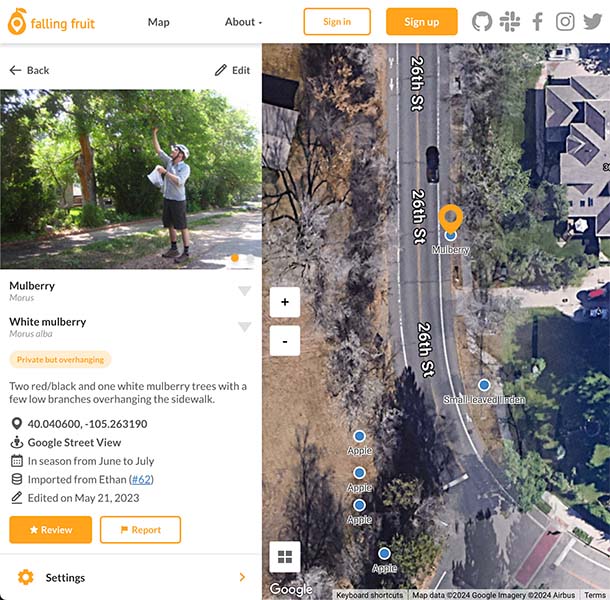
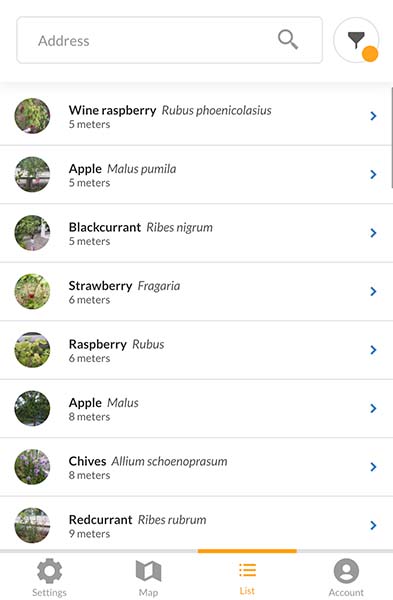
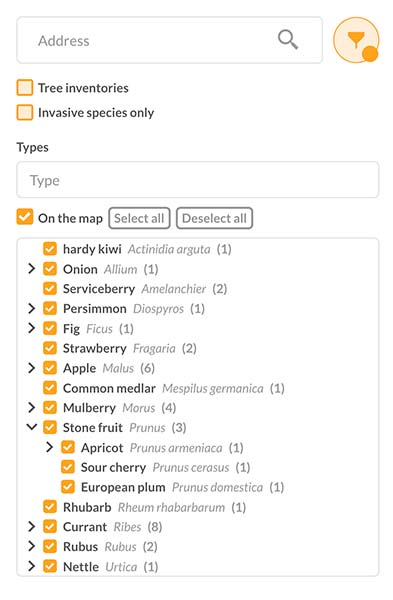
Want to help? Our small team of volunteers is still working through bugs and missing features. If you'd like to contribute your skills as a developer or designer (or simply as a user with an opinion), please join the action on GitHub! Finally, a huge thanks to UIUC Hack4Impact for setting this project in motion. We couldn't have done it without you.
The new website introduces public user profiles (limited for now to name, bio, and date joined). If your name is blank, your profile is considered private and cannot be viewed.
Calls to action
If you'd like to get more involved, join us on Slack! We have recurring community calls and are eager to hear from more users. Our guide at github.com/falling-fruit lists many different ways to contribute. One way right now: Reply with suggestions or requests for content in future email updates.
Problems & Policies
Many thanks to all of you who have taken the time to report problematic or out-of-date content. Reflecting back on thousands of conversations, however, there are a few issues we would like to clear up.
Dumpsters
We encourage the mapping of food-bearing dumpsters and other "freegan" sources (see fallingfruit.org/freegan). Please do not report these locations as spam; if you prefer, the new website (beta.fallingfruit.org) makes it easier to hide them from the map.
Private property
The listing of a location on Falling Fruit is not a blanket invitation to harvest. Use common sense, heed any access restrictions, and when in doubt, seek permission. Locations may be tagged as public, private but overhanging (keep to the public right-of-way), private (seek permission), permitted by owner, or added by owner. This information is not formally verified, and if missing, may not mean the location is public (e.g. some street trees are actually privately owned and maintained). The ability to prominently close a location in response to complaints has been proposed.
Protected lands
Locations are rarely but sometimes posted where harvesting is prohibited. Opinions about such restrictions aside, these locations need to be removed (or locked, as above) and we appreciate your help in reporting them. Adding a protected areas layer to the map has been proposed to automate the process and educate users.
Highlights
Initiatives
- The Parkland Gleaning Project in Billings, Montana, USA plants fruit trees in public spaces and encourages residents to harvest by adding them to Falling Fruit (map).
- In France, the similar Paysage à croquer in Aytré maps public fruit trees to encourage their use by residents (map).
- The Syracuse Urban Food Forest Project in Syracuse, New York, USA recently submitted all of their edible plantings to Falling Fruit (map).
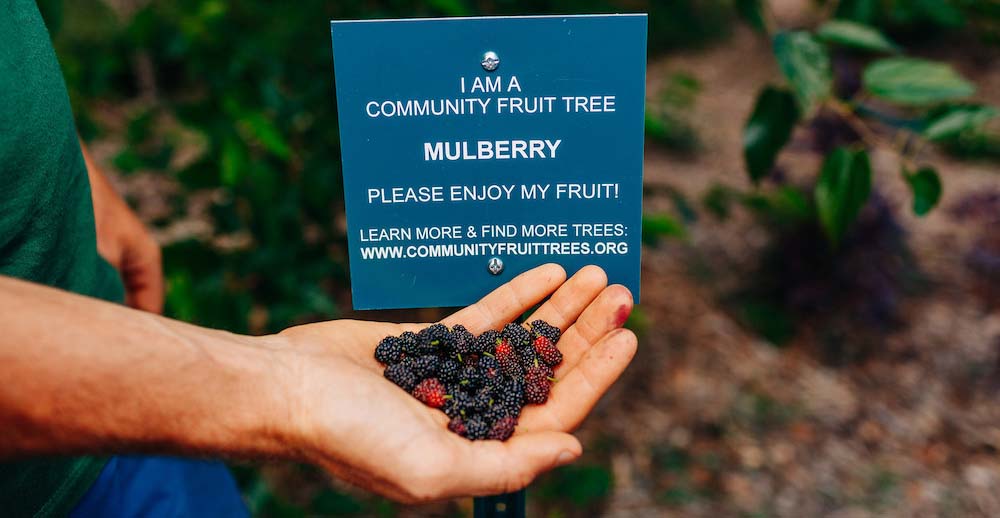
- Robin Greenfield's Community Fruit Trees plants, signs, and maps public fruit trees in communities around the USA (map).
Individuals
- Thanks to volunteer translator and super-user Tống Thái Vương, Falling Fruit is now available in Vietnamese and has hundreds of locations in Vietnam (map).
- In Portugal, a single user added over 2 000 locations. To support this effort, we imported the municipal tree inventories for Cascais, Lisboa, and Porto (map). The initiative was featured by news outlets Mensagem, Peggada, and Público.
In the media
- An article in Atlas Obscura features interviews with users from around the United States.
Falling Fruit has "encouraged me to be more investigative and observant in what's around me," says Amy Nations, a user from West St. Paul, Minnesota, who describes foraging as "plucking nature's Christmas ornaments."
- Another in Ambrook Research includes interviews with Los Angeles food writer Dakota Kim about foraging with her mother, and with Mike Pigg about the Parkland Gleaning Project mentioned above.
"It gets people to come to the parks who normally wouldn't come," said Mike Pigg, director of Billings Parks and Recreation.
- An unexpected appearance in Red Bull's Red Bulletin.
Resources
Our friends at Robin Greenfield have compiled a great beginner guide to foraging and a database of foragers offering tours. Among those listed: Falling Fruit founder Ethan Welty, who leads a free tour annually in his neighborhood in Zurich, Switzerland (photos 2023, 2024). Perhaps his tour slides inspire you to host your own neighborhood plant walk?
— Ethan & the Falling Fruit team