Dear Falling Fruit user,
Welcome to our third email update (does that count as a newsletter?). Below, you'll find important announcements, tantalizing highlights, upcoming events (in Sydney, Australia and across the United States), and opportunities to get more involved.
Calls to action
If you'd like to be more active with Falling Fruit, join us on Slack! We have recurring community calls and are eager to hear from more users. See our contributor guide and project summary for an overview of the project. You can also reply to this email — for example, to suggest or submit content for future editions.
Donate
We are a non-profit organization and rely on donations to operate. Please consider making a financial contribution. Donations within the United States are tax deductible.
Highlights
New board members
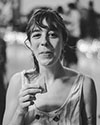
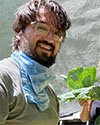
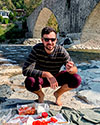
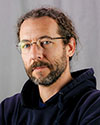
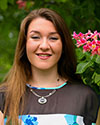
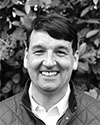
Six new directors joined Jeff Wanner on the board at the start of 2026, replacing departing members Emily Sigman and Craig Durkin. We are grateful to their six years of service, and thank all of you who applied. Read about each board member on our (beta) about page.
Sydney Edible Garden Trail (21–29 March)
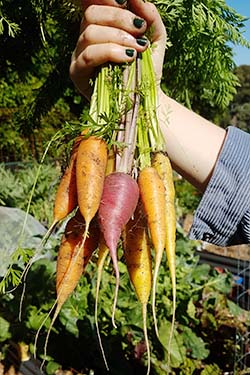
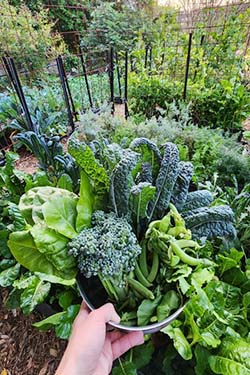
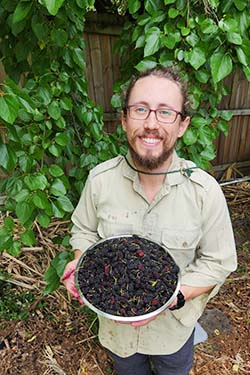
The Sydney Edible Garden Trail is a non-profit, volunteer-run event that showcases Sydney's edible gardens — from backyard growers to community gardens. Participating gardens demonstrate practical, accessible techniques for composting, recycling, water-wise mulching, planting for pollinators, and organic agriculture. Many growers have trees that intentionally overhang public space in order to share with neighbours.
The trail runs 21–22 March (north Sydney) and 28–29 March (south). Get your tickets now!.
— from Mark Udovitch, Vice President
Commons Ecology course
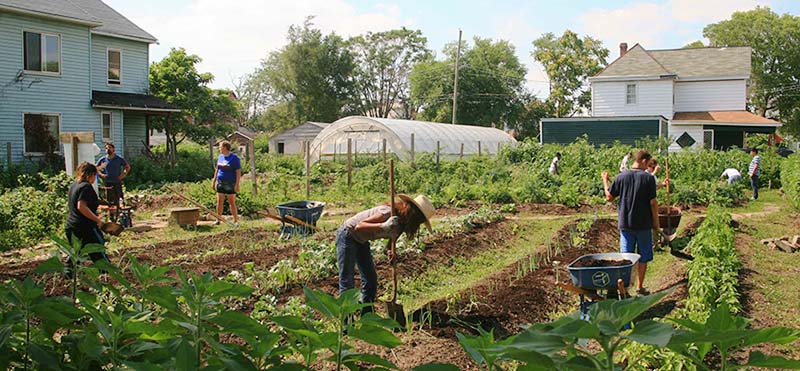
Since 2022, students in Michelle Franco's Commons Ecology course at Ohio State University have stepped out of the classroom and onto the soil — learning firsthand what it means to share, care for, and reimagine our relationship with the land.
Commoning taught me to see landscapes not as property or design projects, but as living relationships shaped by shared care and responsibility. It made me realize that every space holds the potential to become a commons when people choose to nurture it together.
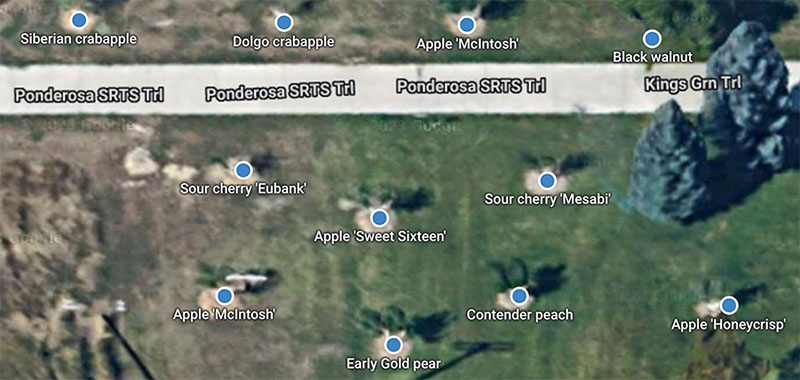
In 2025, the group worked with several local organizations that embody the spirit of commoning, like Franklinton Farms and Bee Collective Gardens. A day of foraging opened up new ways of reading the landscape, connecting local plant knowledge with everyday food practices. Students mapped fruit trees, herbs, and edible plants across residential streets (map), reframing familiar places as shared ecological spaces. They also had the unique opportunity to learn directly from the site's creator, who shared insights into how the platform began, how it collects and maps data, and its role in connecting foragers worldwide. This hands-on experience helped students see how digital tools can foster community-based ecological awareness and collective knowledge sharing.
— from Zofia Jagerova, 2025 course participant
Individuals
- The website was translated to Russian with the help of Anya Sytenkova (Аня Сытенкова) and the species common names on Wikipedia.
- With help from Collin Thomas Durfee, an Environmental Management & Protection student at California Polytechnic State University, we imported the tree inventory for their San Luis Obispo campus (map) — including many drought tolerant species native to Australia.
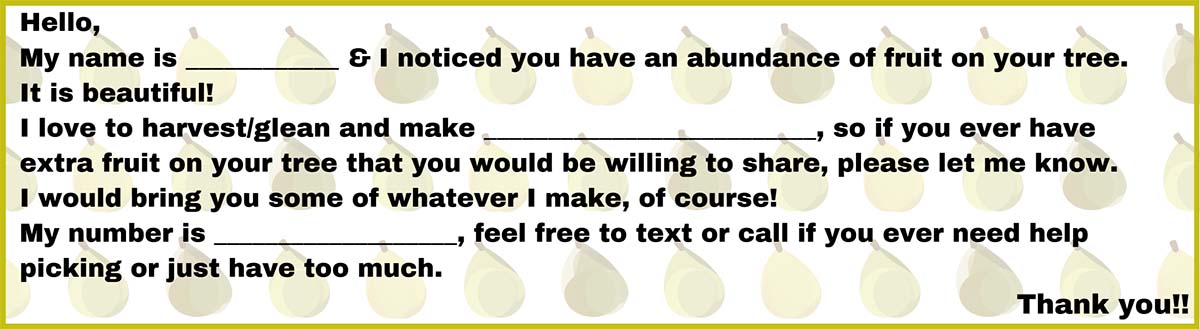
- Natalie Cowan shares a great tip for how to ask permission to harvest fruit trees on private property:
"One of my favorite things to do when things are in bloom where I live is to wander around neighborhoods with my dog and spot fruit or nut trees and bushes. When it is the season for them to be ripe, I return, and leave notes in the mailboxes of homes where they are overloaded, in case they are willing to share, in exchange for whatever product I end up creating. I usually print out a few notes on a sheet of paper because they don't need to be long or waste paper, and I make them cutesy to make them more appealing. Here are some examples of the notes I have used. All art is my own, so it is available for use without infringement."
In the media
- In an article in Sentient Media, communications researcher Garrett Broad weighs in on Falling Fruit:
"It's a useful tool in community education programs, like urban foraging trips, as well as in classes that teach people how to prepare the foraged fruits and vegetables they brought home."And Billing, Montana's Forestry and Natural Resources supervisor Nick Miller shares more background on the city's Parkland Gleaning Project (map):
"The purpose of the project is making sure that you can go out during these times and glean and have access to these apples, plums, these little berries. It's a nice service that we offer the public, and it's important for people to take advantage of it."
When the program was first launched, it made a splash on the local food scene. "For a while you could head out into Billings and get yourself a chokeberry latte," he says. Others would turn the berries into flour and make "this really neat purple and white sourdough loaf that was kind of tart, but then with the right jam on it, it was amazing."
Resources
- Robin Greenfield is spending the year foraging for 100% of his food, and traveling across the United States offering talks and foraging walks.
- Fresh Food Network is an extensive directory of pantries, food banks, community fridges, and other free food programs (including community gardens imported from Falling Fruit) across the United States.
— Ethan & the Falling Fruit team